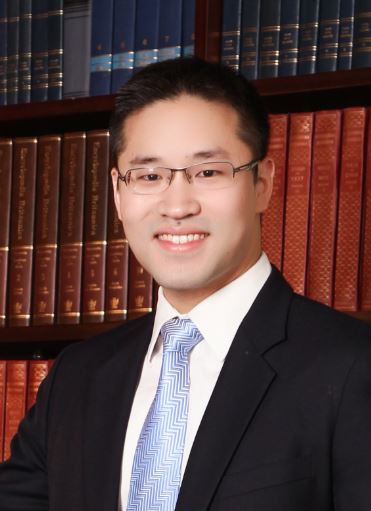
Dr. Joseph Chi-Sing Siu is an Associate Teaching Professor of Music Theory at the University of Maryland, Baltimore County (UMBC). He also serves as Associate Department Chair, Undergraduate Program Director, Department Advisor, and Music Theory Area Coordinator. He is an Affiliate Associate Teaching Professor in UMBC’s Asian Studies Program and previously served as a faculty mentor in the Individualized Study Program (INDS).
At UMBC, Joseph teaches music theory and analysis, music cognition and perception, keyboard skills, and applied piano. Prior to joining UMBC in 2017, he taught music theory and musicianship at both the graduate and undergraduate levels at the Eastman School of Music, serving as a Teaching Assistant and Summer Session Faculty member. Earlier in his career, he taught music and science at the International Christian Quality Music Secondary and Primary School in his hometown of Hong Kong. He received Eastman’s Teaching Assistant Prize for Excellence in Teaching in 2015 and held a UMBC Faculty Pedagogy Fellowship through the Center for Innovation, Research, and Creativity in the Arts (CIRCA) from 2021 to 2023.
Joseph’s research interests include phrase rhythm, hypermeter, and musical form; music perception and cognition; and music theory pedagogy. His doctoral dissertation, Phrase-Rhythmic Norms in Haydn’s and Mozart’s Piano Sonata Expositions (2020), employed corpus analysis to examine relationships among phrase rhythm, hypermeter, and Classical form. Research contributing to his dissertation received the SOCAN Foundation/George Proctor Prize from the Canadian University Music Society in 2017 and the Best Student Paper Award from the South Central Society for Music Theory in 2014. He has presented his music-theoretical research at numerous conferences, including the Hong Kong Association of Music Theorists (2026), Society for Music Theory (2024, 2020), European Music Analysis Conference (2017, 2014), Canadian University Music Society (2017, 2016, 2014), West Coast Conference of Music Theory and Analysis (2017), South Central Society for Music Theory (2017, 2014), Music Theory Society of New York State (2016), Music Theory Midwest (2016), and Rocky Mountain Society for Music Theory (2014).
More recently, Joseph has extended his research on phrase rhythm, hypermeter, and musical form to Chinese art music and popular music. His chapter “Metrical Dissonance and Phrase Grouping in Hwang Yau-Tai’s Oblivion [黃友棣《遺忘》]” appeared in Modeling Musical Analysis (Oxford University Press, 2025), following a presentation at the 2024 Annual Meeting of the Society for Music Theory. Building on this work, his current research examines Hwang Yau-Tai’s phrase rhythm, hypermeter, harmonic language, form, and compositional thought. In 2026, he presented “Metrical Dissonance, Hypermeter, and Narrative in Cantopop: A Study of Hins Cheung’s ‘Missing’ [張敬軒《缺》]” at the inaugural conference of the Hong Kong Association of Music Theorists at the University of Hong Kong. A related chapter, “Metrical Dissonance and Hypermetric Downbeats in Hins Cheung’s ‘Missing’ [張敬軒《缺》],” is forthcoming in the edited volume Modeling Popular Music Analysis.
Joseph also maintains a secondary research interest in music perception and cognition. At the University of Rochester, he collaborated with faculty and students in Music Theory, Brain and Cognitive Sciences, Biomedical Engineering, and Linguistics on interdisciplinary projects supported by the University of Rochester Provost’s Multidisciplinary Award (2012–2013). He also served as Manager of the Eastman Music Cognition Lab from 2012 to 2014. His co-authored publications include “In Their Own Words: Analyzing the Extents and Origins of Absolute Pitch,” published in Psychology of Music in 2019, and “Perspectives on Art-Science Collaborations,” published in SciArt Magazine in 2017. His music cognition research has been presented at the Future Directions of Music Cognition International Conference (2021), Society for Music Perception and Cognition (2015, 2013), Center for Research on Brain, Language and Music (2013), New England Conference of Music Theorists (2013), and Northeast Music Cognition Group (2012). In 2016, he received a National Science Foundation travel award to participate in the International Conference on Mobile Brain-Body Imaging and the Neuroscience of Art, Innovation, and Creativity in Cancun, Mexico. That same summer, he was selected as a Music Fellow at Rice University’s Shepherd School of Music, where he participated in the Third International Exploring the Mind through Music Conference and delivered a public TED-style talk.
At UMBC, Joseph’s music cognition research received support from the College of Arts, Humanities, and Social Sciences Dean’s Research Fund Award (2020–2022). His interdisciplinary work has since expanded to include evidence-based approaches to music theory pedagogy and student success, as well as health-related research. In 2026, he received a UMBC Analytics Mini Grant for “From Math Placement to Music Theory Success,” an empirical project examining relationships among mathematics indicators, music theory placement, and student performance in first-year music theory. He has also collaborated with dermatologists and medical students on research examining music-based interventions for pruritus, resulting in a co-authored poster presented at the Canadian Dermatology Association Annual Conference in 2026.
Joseph earned his Ph.D. and M.A. in Music Theory from the Eastman School of Music at the University of Rochester. His doctoral studies were supported by a Doctoral Fellowship from the Social Sciences and Humanities Research Council of Canada. He holds a B.Mus. in Piano Performance with Honors from the University of Western Ontario, where he graduated with distinction and received the UWO Gold Medal for the highest GPA in his program. He also completed an M.B.A. at the University of Maryland Global Campus.
Alongside his teaching and scholarship, Joseph has extensive experience in academic leadership, curriculum development, and student advising. He has served as Associate Department Chair since 2022, Undergraduate Program Director since 2018, and Department Advisor since 2017. In these roles, he oversees curriculum and program development, academic advising, course scheduling, assessment and accreditation, transfer articulation, academic policy, and student success initiatives. His university service has included the Faculty Senate Academic Conduct Committee (2026–present) and the Provost’s AI Working Group (2024–2025). He also participated in UMBC’s Office of the Provost Inaugural Leadership Development Mentoring Program (2023–2024) and was selected for the inaugural cohort of the LEAP Leadership Development Academy (2024–2025), organized by FranklinCovey in partnership with UMBC’s Human Resources and Strategic Talent Management Department.
Beyond his university responsibilities, Joseph has been active in professional service. Elected to the Executive Board of the Music Theory Society of the Mid-Atlantic (MTSMA) in 2018, he served as Treasurer from 2020 to 2025, Program Committee Chair in 2021, and Local Arrangements Chair in 2019, in addition to serving on program committees and adjudicating student paper competitions. In 2025, he served on the Program Committee for the Analytical Approaches to World Music Symposium on Asian Musics at Cornell University. He also serves as UMBC’s representative to the Maryland Area College Music Association.
Contact
Associate Teaching Professor
Associate Department Chair
Undergraduate Program Director
Department Advisor
Email: jsiu@umbc.edu
PAHB 259
Phone: 410-455-8043
Teaching
Music Theory
Music Cognition and Perception
Piano & Keyboard Skills
Academic Advising
Education
Ph.D. Music Theory, Eastman School of Music, University of Rochester (2020)
M.A. Music Theory, Eastman School of Music, University of Rochester (2015)
B.Mus. Piano Performance, University of Western Ontario (2009)